From
$ 990
/Per Person
Multi-Day Hiking Adventures
From
$ 990
/Per Person
Multi-Day Hiking Adventures
From
$ 990
/Per Person
Multi-Day Hiking Adventures
From
$ 990
/Per Person
Multi-Day Hiking Adventures
From
$ 990
/Per Person
Multi-Day Hiking Adventures
7 days / 6 nights
Daily departures
Private Service
Moderate
CHOQUEQUIRAO TREK TO MACHUPICCHU
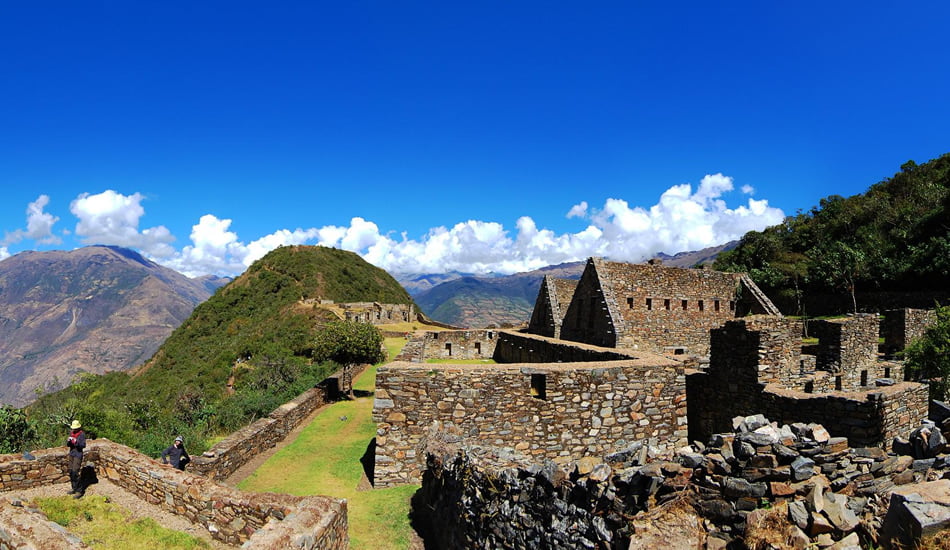
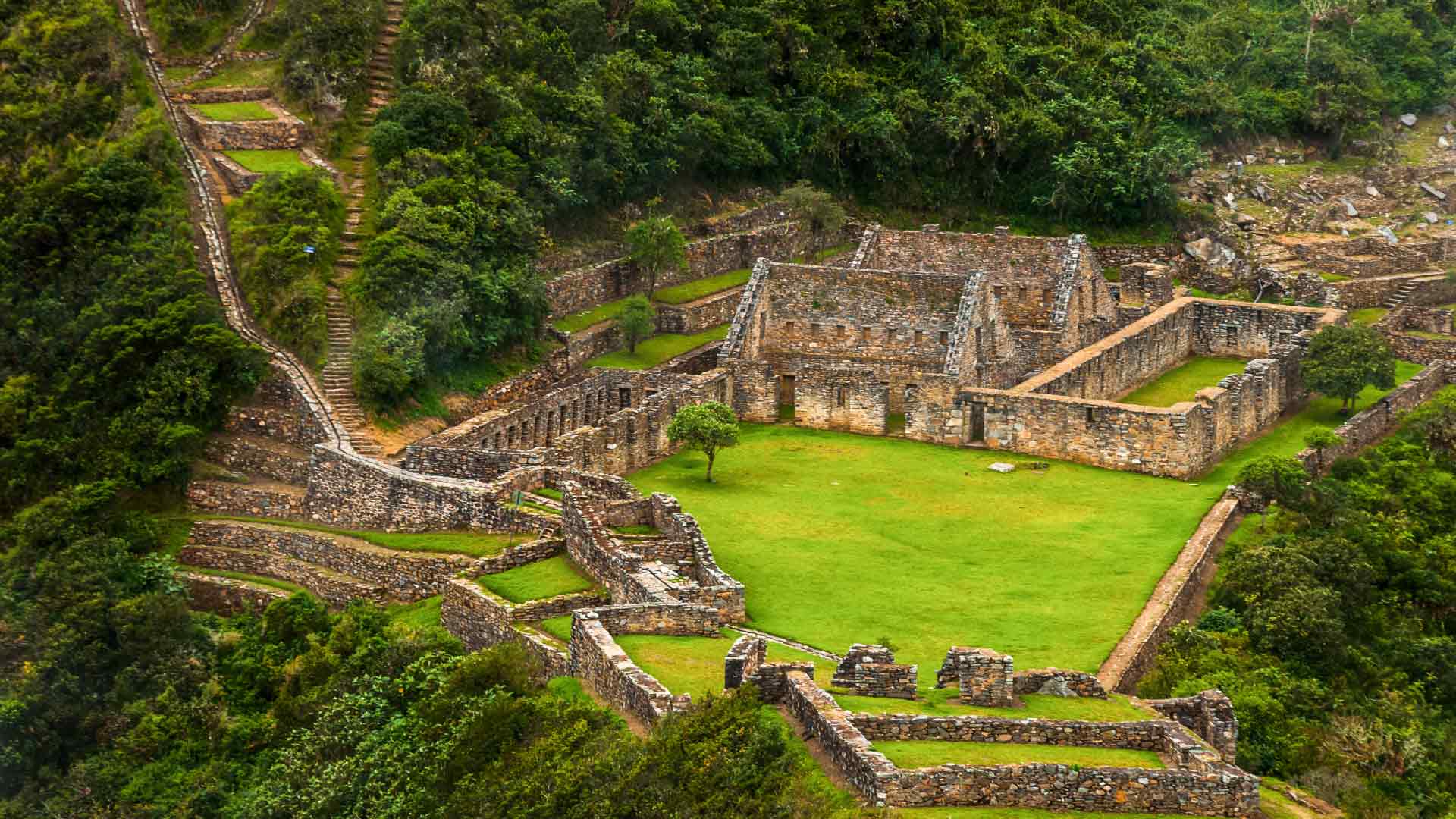
The Inca place of Choquequirao (elevation 3105mt) is located to the north east of Cusco between the Apurimac River and the mountain range of Vilcabamba, the archaeological site of Choquequirao is considered as the last place or Inka refuge by Peruvian historians can also appreciate animals such as: condors, spectacled bear, eagles, plants such as coffee, coca, bamboo, corn, flowers such as: orchids, etc.
This walk is for people who have experience because the degree of difficulty from level 1 to level 5 is 4 to 5.
But it is a very beautiful hike highly recommended for people who like hiking, mountains and nature and the non-tourist because it is not commercial and there are not many people.
Trip Highlights
The 7-day Choquequirao Trek is a challenging and comprehensive Andean journey that connects the Inca’s “cradle of gold,” Choquequirao, with the iconic Machu Picchu. The route begins with a strenuous descent into the deep Apurimac Canyon, followed by demanding ascents to fully explore the remote Choquequirao site. The trek then progresses through high-altitude landscapes, crossing Maizal and Yanama, before offering a necessary rest day at the Santa Teresa hot springs. Finally, the journey culminates with a hike to Llactapata, providing the first distant view of Machu Piccho, leading travelers to Aguas Calientes for the early morning visit to the famous citadel, concluding an epic experience blending history and challenging nature.
7-Day Choquequirao Trek Itinerary (Summary by Day)
-
Day 1: Cusco → Cachora → Capulilloc → Chiquisca → Playa Rosalina → Santa Rosa (Camp).
-
Highlight: Descent into the Apurimac Canyon.
-
-
Day 2: Santa Rosa → Maranpata → Choquequirao Camp.
-
Highlight: Arrival at the archaeological site and first guided exploration of Choquequirao in the afternoon.
-
-
Day 3: Choquequirao → Rio Blanco → Maizal (Camp).
-
Highlight: Further Choquequirao exploration and trek through humid forest (potential sighting of the Andean Bear).
-
-
Day 4: Maizal → Minas Victoria → Yanama (Camp).
-
Highlight: Ascent to the high point, Victoria Mines (4150 masl/13,615 ft).
-
-
Day 5: Yanama → Santa Teresa.
-
Highlight: Rest day. Local transport to Santa Teresa and visit to the Thermal Baths.
-
-
Day 6: Santa Teresa → Lucmabamba → Llactapata → Hydroelectrica → Aguas Calientes (Hostel).
-
Highlight: Trek to Llactapata with a panoramic view of Machu Picchu (10% visible in the distance).
-
-
Day 7: Aguas Calientes → Bus → Machu Picchu → Train → Ollantaytambo → Cusco.
-
Highlight: Guided tour of the Machu Picchu Inca Citadel.
-
DETAILED TOUR ITINERARY
TREK 1st. DAY: CUSCO – CACHORA – CAPULILLOC – CHIQUISCA – PLAYA ROSALINA – SANTA ROSA
The first day starts very early with the pick-up of your hostels from 3:30 am to 4:00 am and then go to the town of Cachora (elevation 2800mt) and make a break or breakfast if you wish (not included) and then continue for 30 minutes more at the beginning of the Capulilloc trek (elevation 2900 mt- distance 4 hours from Cusco))
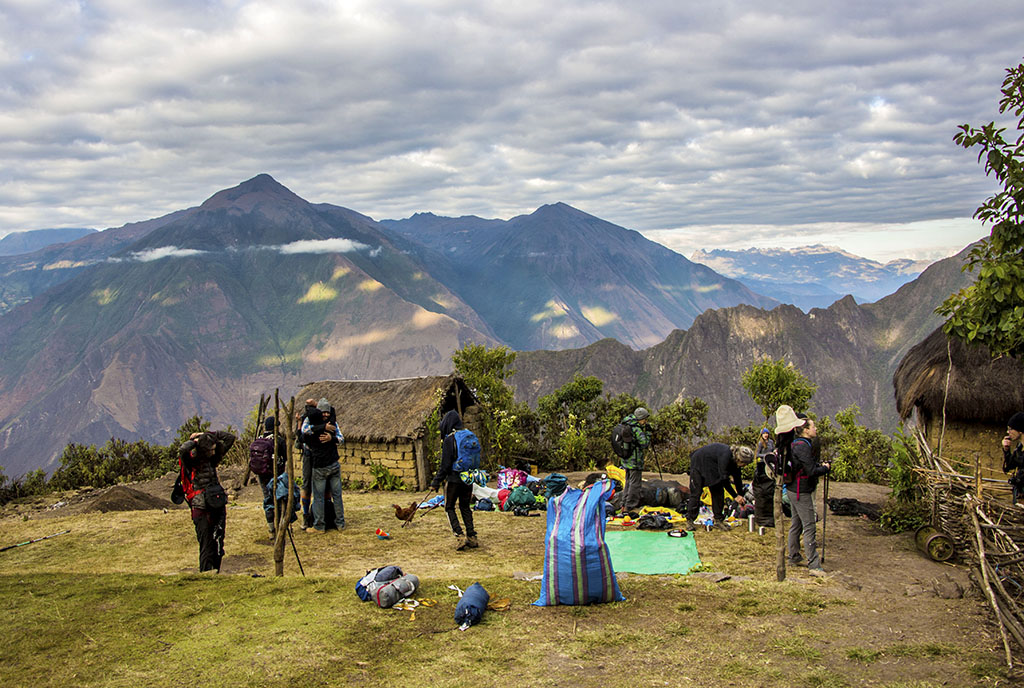
where we will have a panoramic view of the Apurimac canyon and we will be seeing our first objective that is the archaeological site of shockquirao at a distant distance and also in this place there will be mules, donkeys for the transport of our travel equipment. tents, sleeping bags, mattresses or inflatable mats, your personal belongings, food for the entire trek.
We start with a descent or downhill over the apurimac canyon through small communities Cocamasana and Chiquisca (lunch place) in the lower part of the valley,
the weather is warm and sunny in the dry season and then continue down for 30 more minutes until the Rosalina beach (elevation 1550 mt) and then cross the Apurimac river by the Rosalina bridge and start the ascent for 2 hours to our Santa Rosa camp (elevation 2100 mt)
- Walking distance 14 km –8 hours or so.
TREK 2nd. DAY: SANTA ROSA – MARANPATA -CHOQUEQUIRAO CAMPAMENTO
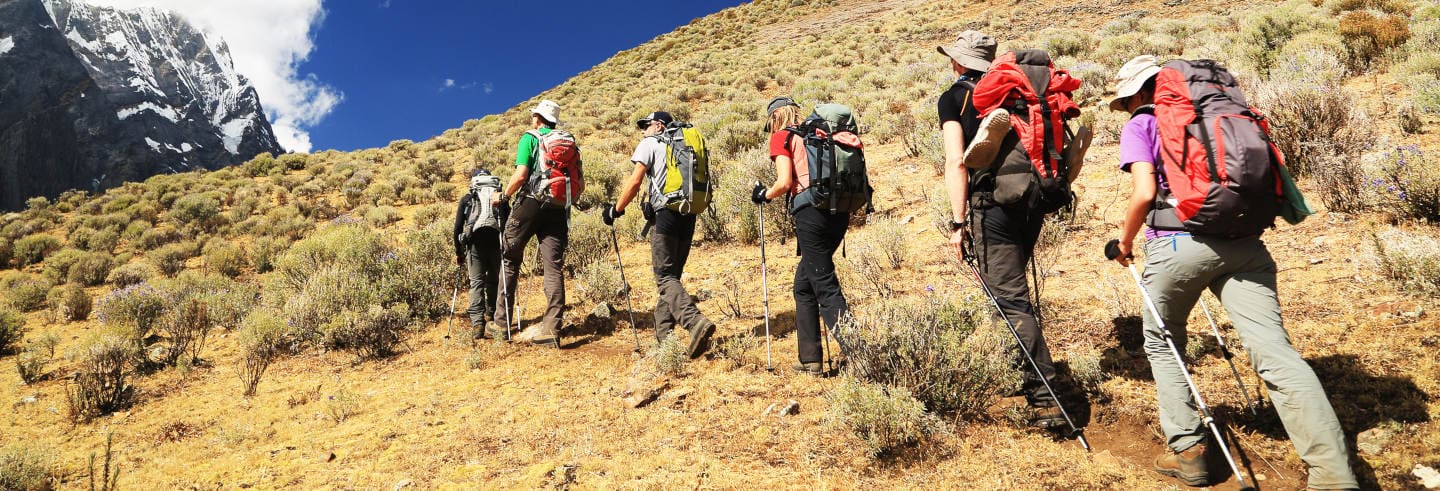
We woke up at 5:00 am to then have our breakfast and start our walk in the direction of Maranpata the road is zigzagging for about 3 hours or so where we can appreciate the Apurimac Canyon and the mountains
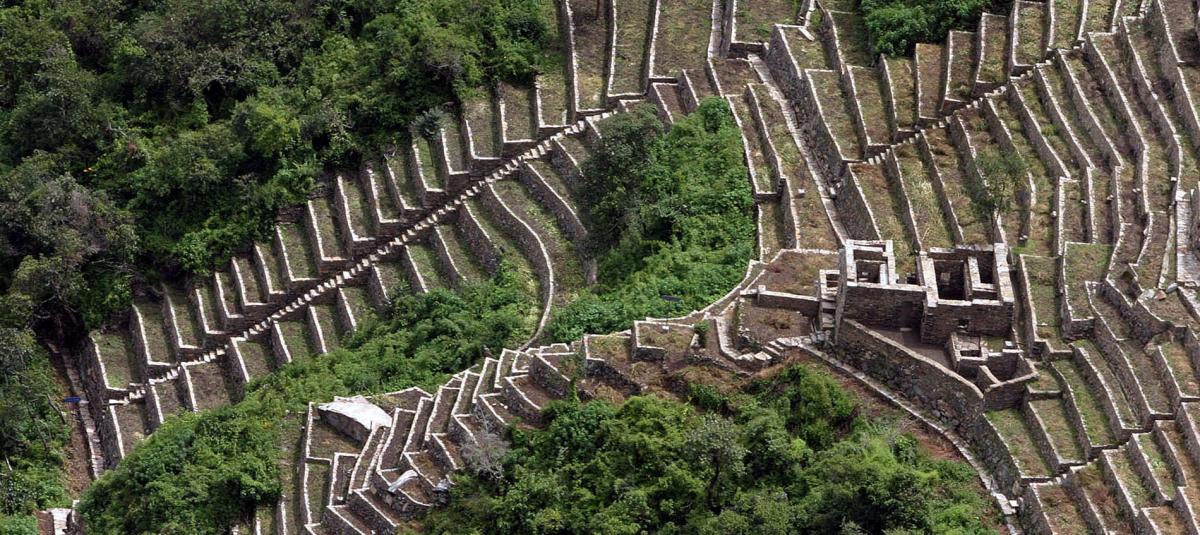
that surround the wonder of Crashquirao and then continue through a very beautiful Andean forest or forest for approximately 2 hours until our first destination Choquequirao (elevation 3055 mt) where we will have our camp in some terraces inks conditioned for the very beautiful campsites place of lunch and rest of the second day.
After lunch we will have the visit and exploration with our guide to the archaeological complex of Choquequirao after our dinner.
- Walking distance 12 km – 5 hours approximately.
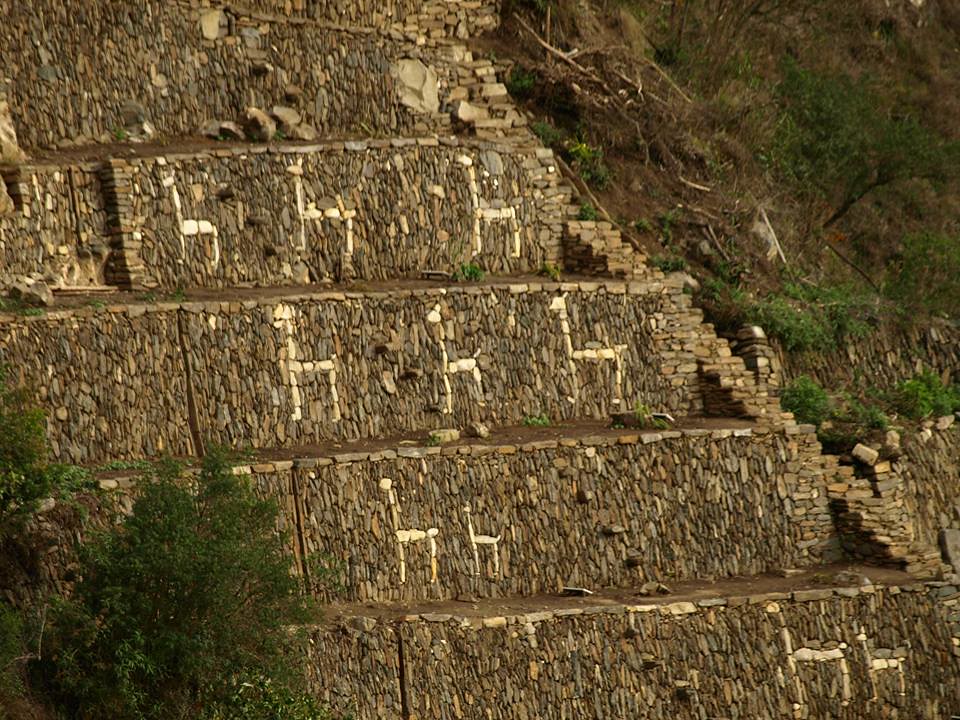
TREK 3rd. DAY: CHOQUEQUIRAO – RIO BLANCO – MAIZAL
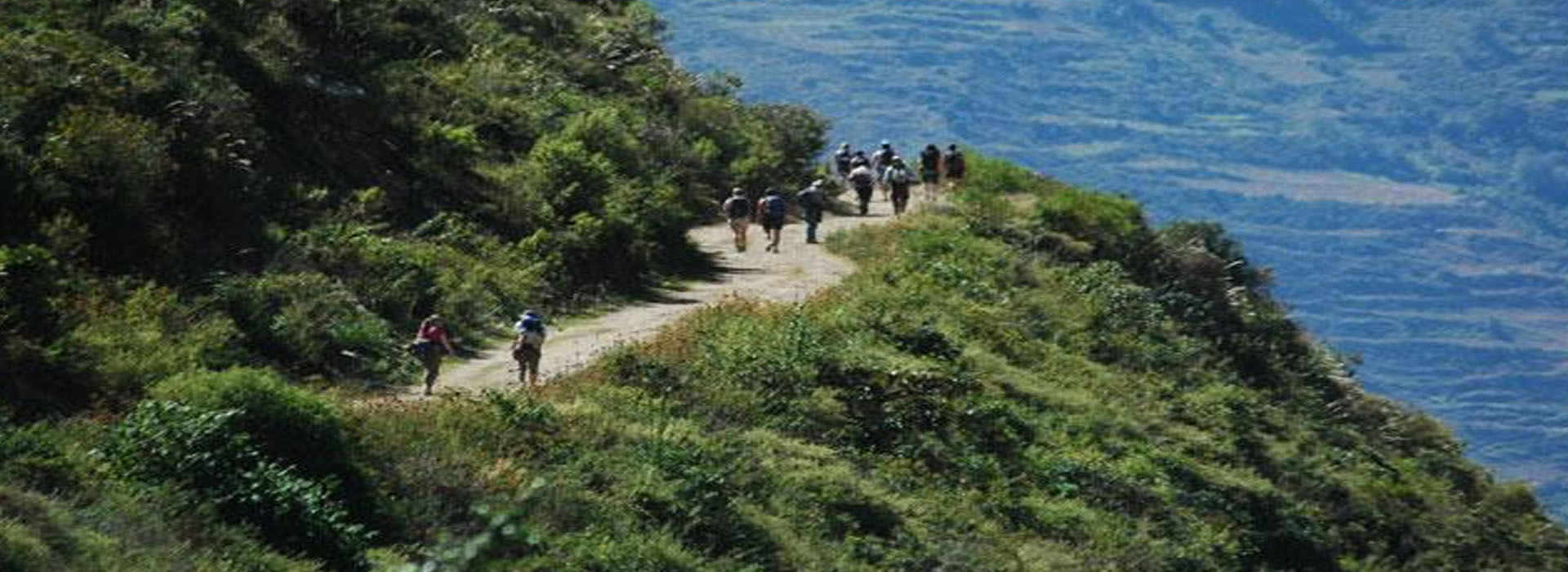
After breakfast we will do a further exploration in Choquequirao and enjoy the first rays of the sun and then continue our journey and take a walk in a humid forest with lots of beautiful vegetation of native plants such as bamboo and flowers such as orchids, begonia,
and if there is luck to be able to see the famous Andean bear or bear of cravings 1 hour and 30 minutes walk until we reach the upper part of Choquequirao and then make a 3-hour descent to Rio Blanco (elevation 1990 mt) where we will have a very refreshing lunch and then make a steep and demanding 3 hours more until you reach the third cornfield (elevation 3000 mt) where we will enjoy the view of the mountains and valleys that surround Choquirao and have our dinner.
TREK 4th. DAY: MAIZAL – MINAS VICTORIA – YANAMA
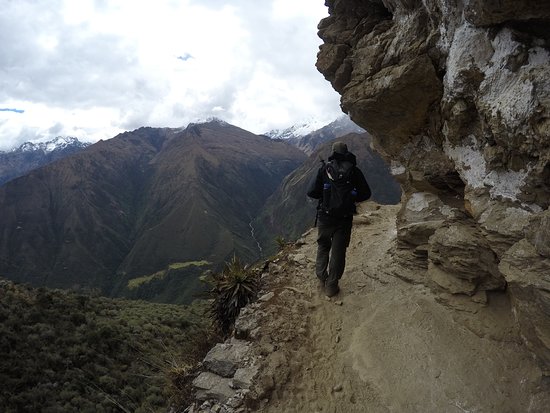
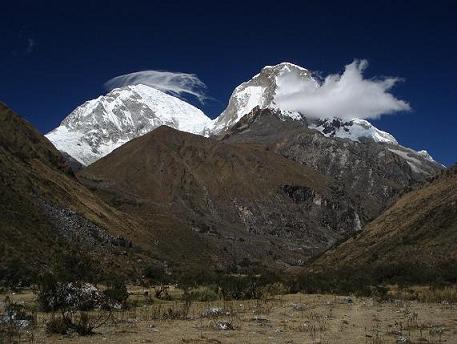
We wake up at 6:00 am and after breakfast we start the ascent walk from 4 to 5 hours through a humid forest full of beautiful vegetation until we reach Victoria Mines (altitude 4150 mt)
then we will descend for an average of 2 hours or less approximately to our yanama camp which is an Andean community (elevation 4000mt)
TREK 5th. DAY: YANAMA – PEOPLE OF SANTA TERESA – THERMAL BATHS
This is a day of rest and relaxation we wake up 6.00am after our breakfast and then say goodbye to the service of the horsemen, mules giving them their personal appreciation as a tip not included
and then we ready our our personal things and travel equipment to take a local transport to the town of Santa Teresa (elevation 1810 mt) duration 3 hours where we will have lunch and then enjoy the thermal baths of the place, dinner camp.
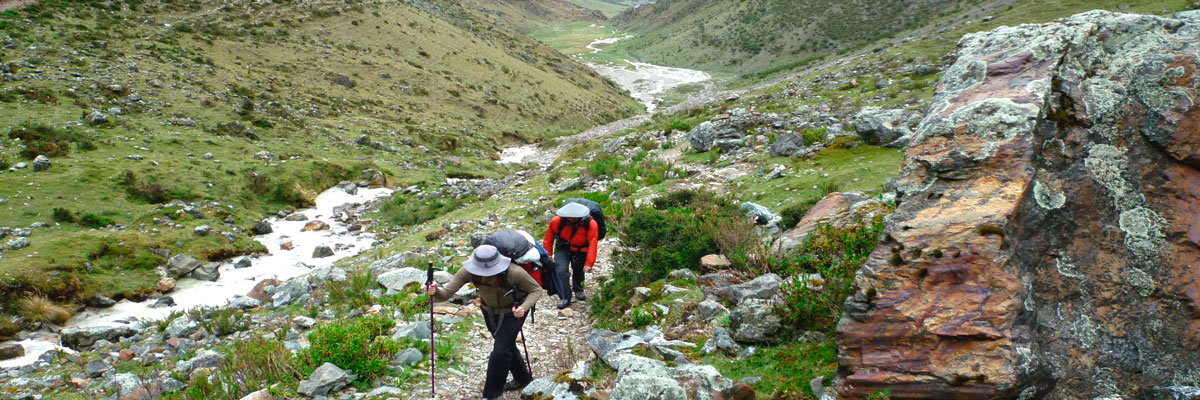
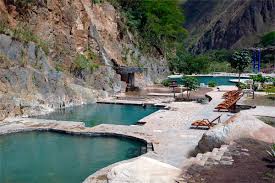
TREK 6th. DAY: PUEBLO SANTA TERESA – LUCMABAMBA – PLACE ARQUEOLOGICO LLACTAPATA – HYDROELECTRICA – PUEBLO AGUAS CALIENTES HOSTAL
After breakfast we will say goodbye to our chefs and giving them a personal appreciation as tips for the delicious meals they cooked after we will take a local bus for 50 minutes to reach lucmabamba (2000 mt elevation)
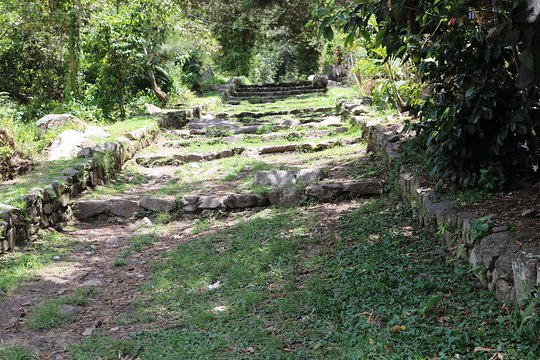
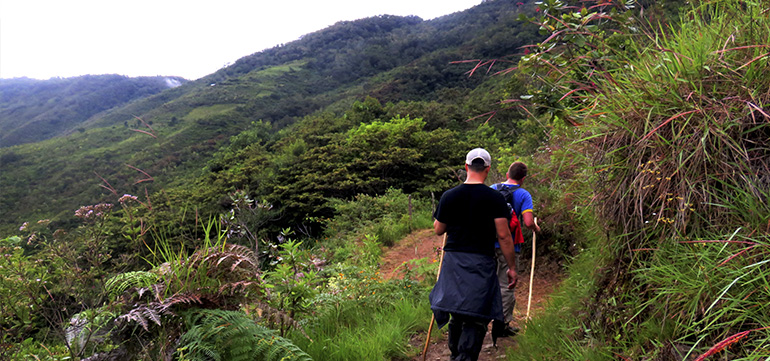
starting point of our uphill walk for approximately 3 hours or less until you reach the archaeological zone of llactapata (elevation 2700 mt) and enjoy the panoramic view of the place and see 10% machupicchu in the distance and then make an ascent of 2 hours and 30 minutes approximately until you reach the resting place of hydroelectric
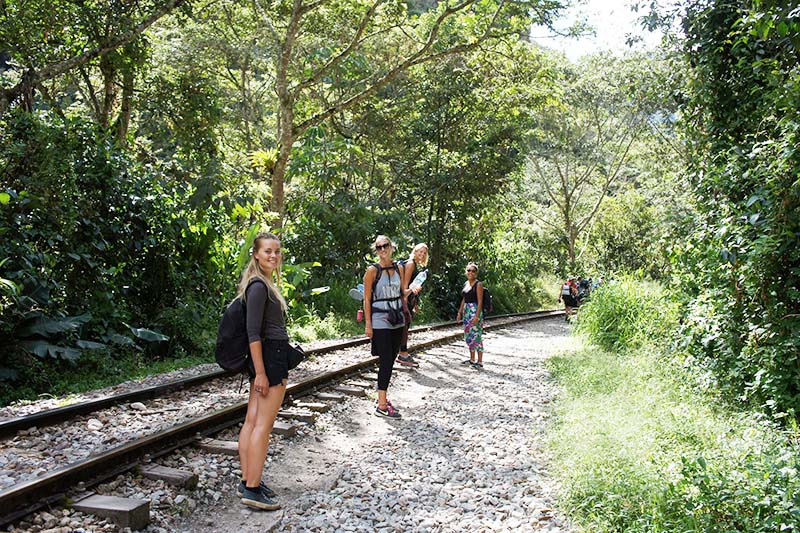
where we will have a lunch and then walk 3 more hours through the Urubamba river valley until we reach the town of Aguas Calientes hostel.
TREK 7th. DAY: PUEBLO AGUAS CALIENTES –BUS – MACHUPICCHU – TRAIN – PUEBLO OLLANTAYTAMBO – CUSCO
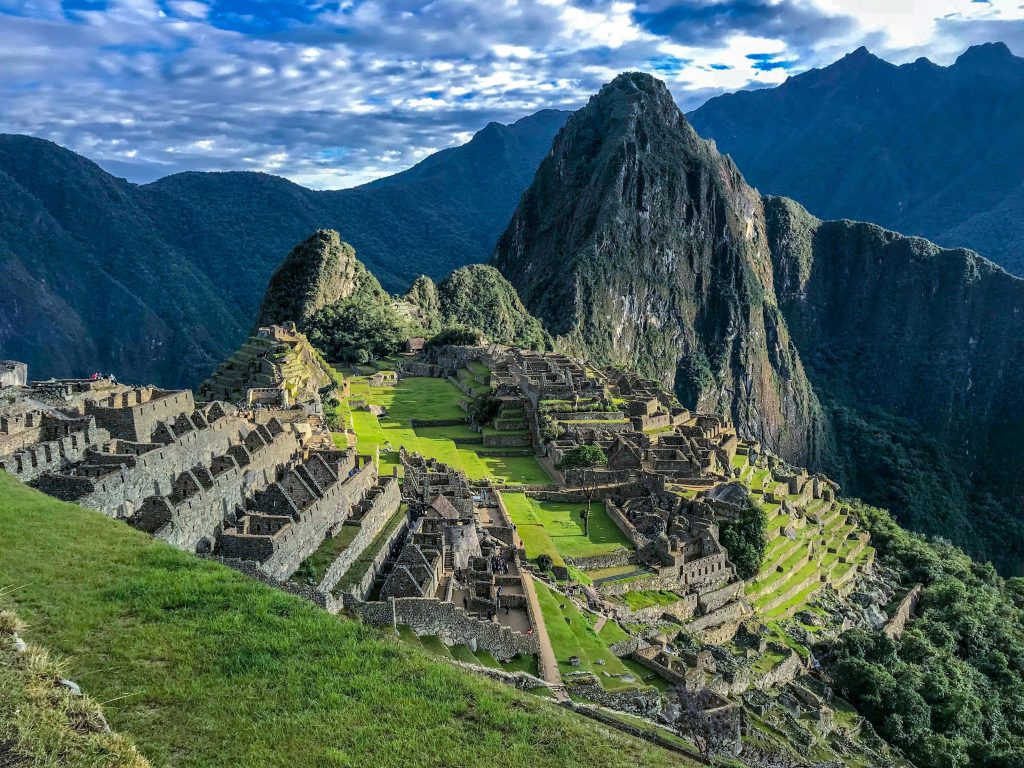
We woke up very early 4:30 am and to be able to take our bus to Machu Picchu and see the sunrise then explore the Inca citadel of Machupicchu with our guide and after seeing it and enjoying it we will take a bus down to the town of Aguas Calientes, farewell to the Guide and your personal appreciation to the tip guide not included and then the train to the town of Ollantaytambo and a bus to the city of Cusco Plaza San Francisco downtown.
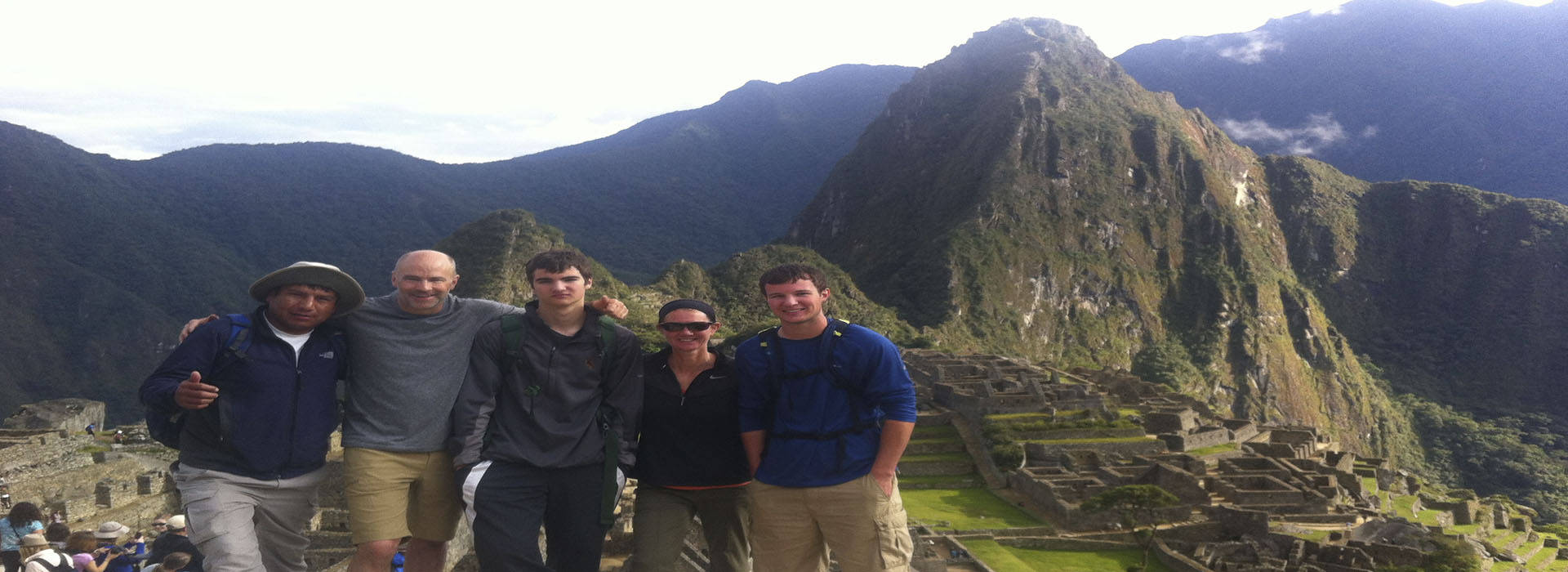
End of Oki Doki Travel Peru service.
What is Included?
- Information with the guide responsible for the tour 1 day before departure at the office of okidoki travel Peru. Location (new high street # 644 in okidoki hostal cusco).
- DELIVERY OF THE EQUIPMENT, such as: (sleeping bag, hiking poles, inflatable mattress and a backpack to place all this equipment on horses or mules)
- Emergency horse in case we have some problems with our passengers during the hike.
- Transportation to the beginning of the tour and return on the last day to Cusco
- Ticket to CHOQUEQUIRAO
- Professional guide throughout the tour
- Food 6 breakfasts 6 lunches 6 dinners
- Camping equipment tents, sleeping bag, inflatable flask, walking sticks
- Chef x 6 days
- Arrieros and horses in charge of the transport of equipment
- Per passenger they have 6 kilos
- Snack for the trek
- Bus up and down to machupicchu
What is Not Included?
- The first breakfast
- Cold water (you can buy it all the way
- Tips (voluntary tips)
- Last lanch
What to Bring to the Tour?
- ORIGINAL PASSPORT (IF STUDENT CARNET)
- BACKPACK (30 LITERS)
- PUNCH OF RAIN
- WALKING SHOES
- LANTERN
- TOWEL + BATHING PAPER
- PERSONAL MEDICATION
- SOLAR BLOCKER-SUNGLASSES-HAT HAT ..
- MOSQUITO REPELLENT
CHOCOLATE CARAMELOS SNACKS - PHOTO CAMERA
- EXTRA MONEY
Cancellation Policies
CONDITIONS FOR MAKING A RESERVATION AND CANCELLATIONS
to make your reservation you need the exact date of your Choquequirao Trek departure because there are no changes or cancellations
MONEY DEPOSIT
To confirm your reservation and your participation in the trek, you need to make a deposit. This deposit is to reserve all your trek services and, most importantly, the purchase of the Machu Picchu ticket (the Machu Picchu ticket is personal, it cannot be canceled or change date)
CANCELLATION POLICY
Cancellations and date changes are not accepted, you simply lose your deposit, there is no refund.
your deposit is not for our pocket, it is for the organization of a good trek in okidoki and to have this good organization you have to make advance reservations of all the services that you are going to have during the 4 or 5 days of your trek and these reservations are made with deposits so as not to have inconveniences or last minute cancellations from our suppliers and if we cancel these reservations we lose our deposits because this is not a game and by making a reservation with our service providers for the trek we are blocking spaces that they can simply give to other tour operators who also need it.
Frequently Asked Questions
FAQs: Choquequirao to Machu Picchu 7-Day Trek
1. Where is the Choquequirao Archaeological Park located?
The park is located in the western part of the Cusco region, spanning across the Vilcabamba mountain chain. Politically, it sits between the departments of Cusco and Apurímac, northwest of Cusco city, at an average altitude of 3,500 meters (11,483 feet).
2. How big is the Choquequirao Archaeological Park?
The total protected area comprises 522,878.30 hectares with a perimeter of 367.09 km, making Choquequirao one of the largest and most significant Inca administrative and religious centers ever discovered.
3. Which provinces and districts are included in the park’s territory?
The park’s territory covers multiple districts across three provinces:
-
La Convención (Cusco): Echarate, Vilcabamba, Villavirgen, Inkahuasi, Santa Teresa, Quimbiri, Santa Ana, and Maranura.
-
Anta (Cusco): Limatambo and Mollepata.
-
Abancay (Apurímac): Curahuasi, Huanipaca, and San Pedro de Cachora.
4. What are the natural boundaries of the Choquequirao Park?
-
North: Quimbiri, Echarate, Santa Ana, and Maranura.
-
South: Huanipaca, San Pedro de Cachora, Curahuasi, Mollepata, and Limatambo.
-
East: Huayopata, Machu Picchu, and Ollantaytambo.
-
West: Chungui and Pacobamba (Apurímac).
5. How do we access the Choquequirao trekking area?
There are primary access routes via road and bridle paths. The traditional and most popular route starts from the Cusco – Abancay highway, heading through Cachora or Huanipaca down into the deep Apurímac River canyon toward the ruins.
6. Can you reach Choquequirao via the Mollepata or Vilcabamba routes?
Yes. Other access points include the asphalted road from Cusco to Abancay through Mollepata (crossing the Vilcabamba mountain range near Salkantay), or via the Cusco-Quillabamba highway branching through Chaullay toward Vilcabamba.
7. Is there a railway connection to the Choquequirao trek?
While the traditional Choquequirao trek starts on foot from the Apurímac side, our 7-day extended route connects the high-altitude mountain passes all the way to the Cusco-Machu Picchu railway line via Santa Teresa and the Hydroelectric station.
8. How difficult is the 7-day Choquequirao to Machu Picchu trek?
This is considered an advanced and physically demanding trek. It involves steep descents into massive canyons (like the Apurímac) and demanding ascents to high-altitude mountain passes exceeding 4,000 meters. Prior physical conditioning and acclimatization in Cusco are essential.
9. What is the highest altitude reached during the 7-day expedition?
Depending on the exact trail variation, hikers cross high Andean passes that typically reach between 4,000 and 4,600 meters above sea level.
10. Why choose the 7-day Choquequirao to Machu Picchu route instead of the classic Inca Trail?
This route offers an ultimate off-the-beaten-path experience. While the classic Inca Trail is heavily crowded, the Choquequirao trail receives very few tourists, offering raw wilderness, untouched Inca ruins, deep canyons, and remote Andean communities.
11. What kind of weather should I expect during the 7-day trek?
Weather varies drastically due to the changing ecosystems. Days are usually warm and sunny (ranging from 15°C to 25°C), while nights—especially near high passes or camps—can drop below freezing (0°C to -5°C).
12. When is the best time of the year to do the Choquequirao trek?
The dry season, from May to October, is the absolute best time. Skies are clearer, and rainfall is minimal. The wet season (November to April) brings heavy rains, making canyon trails slippery and dangerous.
13. Do I need to acclimatize before starting the trek?
Yes! We strongly recommend spending at least 2 to 3 days in Cusco (3,400 meters) before starting the trek to allow your body to adapt to the high altitude and prevent altitude sickness.
14. What accommodations and facilities are used along the trail?
Unlike standard luxury hotels, accommodation consists of campsites set up along the route in scenic valleys or near local farming settlements. Basic community facilities and field kitchens are managed by your expert trekking crew (guides, cooks, and muleteers).
15. How does the trek end at Machu Picchu on the 7th day? After crossing the remote Andean chains and descending into the jungle brow, you will reach the Hydroelectric station, walk along the railway tracks to Aguas Calientes, and on the final day, enjoy a fully guided tour of the Machu Picchu citadel before returning to Cusco by train.
Choquequirao Trek to Machu Picchu
High-Altitude Trekking
FORM BOOKING NOW
Choquequirao Trek to Machu Picchu 7 Days (Itinerary and Map)
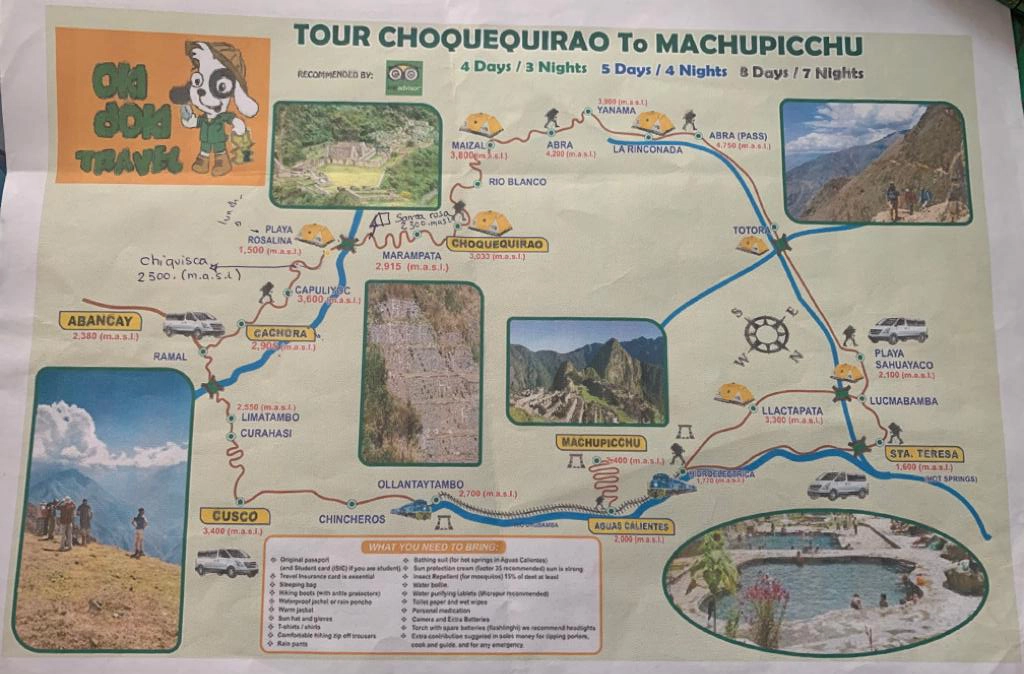
Cusco, Cachora, Capulilloc, Playa Rosalina, Santa Rosa, Maranpata, Choquequirao, Rio blanco, Maizal, Yanama, Totora, Colpapampa, Playa Sahuayaco, Santa Teresa, Llactapata, Hidroelectrica, Aguas calientes, Machupicchu
Book this tour now
-
Starting at Price From:Adult: 990 /per person - Student: 990 /per person
-
Tour Name:Choquequirao Trek to Machu Picchu
-
Trip duration:7 days / 6 nights
Payment Methods

This is the payment link for your deposit which has a 7% shipping fee which is not included.
Customer Service Tour Operator
Looking for a unique adventure?
You're on the right track! Join us and explore one of Cusco's most popular routes Travel Peru.
24/7/365 WC speaks English and Spanish